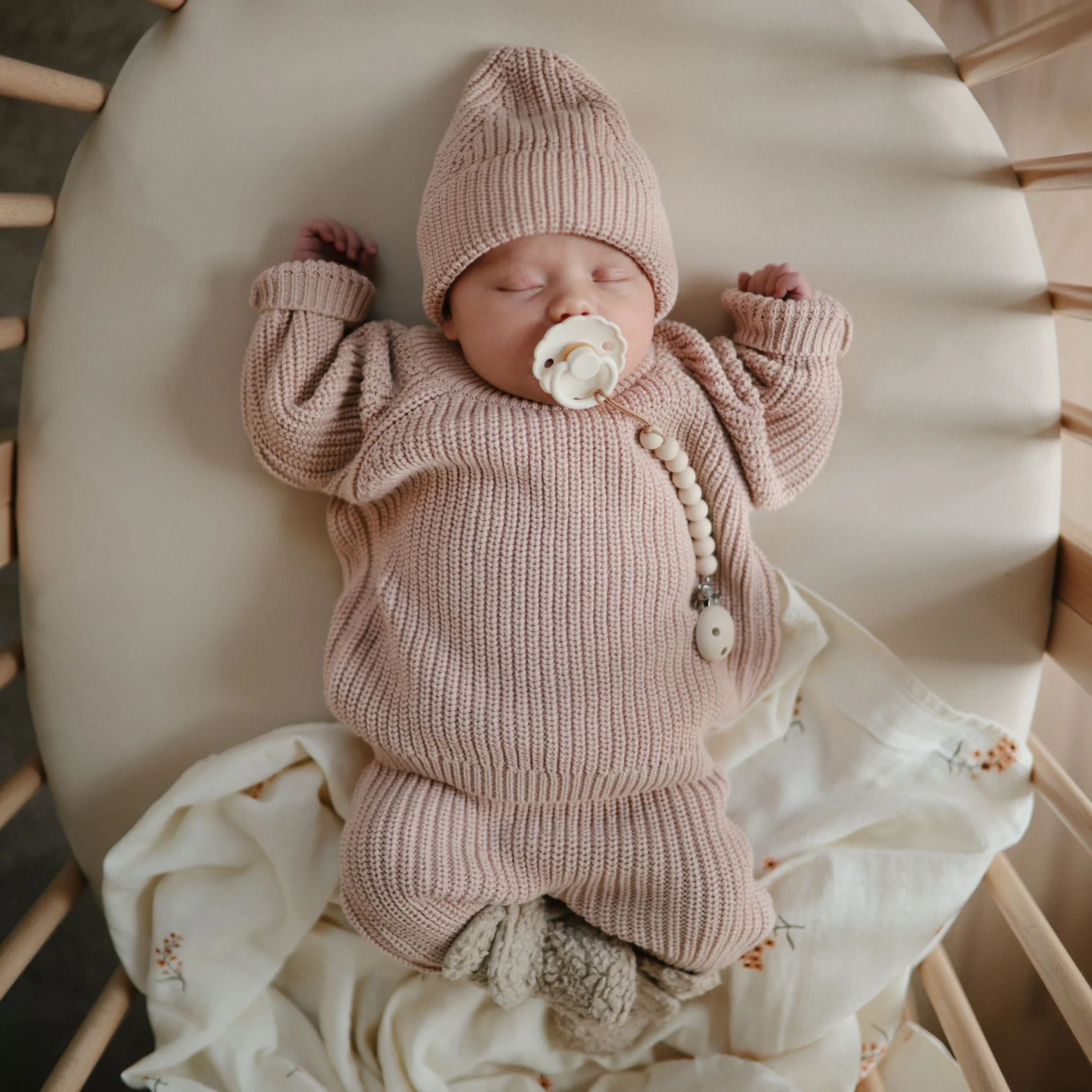
Look for GOTS-certified organic cotton (grown without pesticides, processed without toxic chemicals). Avoid conventional cotton treated with formaldehyde, flame retardants, and synthetic dyes. Skip polyester and synthetic blends that shed microplastics. Wash new clothes 2-3 times before baby wears them. Shop our vetted clothing collection.
When I was building our registry, I assumed baby clothes were naturally safe. They're for babies, right? Then Kyle sent me an article about formaldehyde in children's clothing (yes, the same chemical used to preserve dead bodies) and I went down a rabbit hole I couldn't unsee.
Conventional cotton is one of the most pesticide-intensive crops in the world. Those pesticides don't just disappear after harvest. Residues remain in the fabric. Then the cotton gets treated with formaldehyde to prevent wrinkling and shrinking, dyed with heavy metals, and sometimes coated with flame retardants. All of this ends up against your baby's skin, which is 30% thinner than adult skin and absorbs chemicals faster.
The good news? There's a certification system that actually means something. GOTS (Global Organic Textile Standard) certified clothing is grown without pesticides, processed without toxic chemicals, and produced under strict social and environmental standards. It's the gold standard for baby clothing, and it's what we dress Levi in every day.
Why Baby Clothing Materials Matter
Your baby spends 24 hours a day in their clothes. Unlike toys or products they occasionally touch, clothing is in constant contact with their skin (the body's largest organ and a direct pathway for chemical absorption).
Conventional cotton production uses approximately 16% of the world's insecticides and 7% of pesticides despite using only 2.5% of agricultural land. These chemicals include organophosphates (nerve agents), carbamates (endocrine disruptors), and pyrethroids (neurotoxins). Residues persist in the fabric even after manufacturing.
But the pesticides are just the beginning. After harvest, conventional cotton goes through chemical-intensive processing: chlorine bleaching, formaldehyde-based wrinkle treatments, heavy metal dyes (including lead, cadmium, and chromium), PFC-based stain repellents, and sometimes flame retardants. Each step adds another layer of chemical exposure.
Synthetic fabrics like polyester, nylon, and acrylic are made from petroleum. They shed microplastics with every wash, release endocrine-disrupting chemicals, and don't breathe well (which can cause overheating and rashes). For babies who put everything in their mouths, clothing is essentially another thing they're ingesting.
What to Look For
GOTS (Global Organic Textile Standard) is the most rigorous certification for organic textiles. It requires organic fiber content, bans hundreds of toxic chemicals in processing, mandates safe dyes, requires wastewater treatment, and enforces social responsibility standards. This is the certification that actually matters.
While not as comprehensive as GOTS (it doesn't require organic growing practices), Oeko-Tex certifies that the finished fabric has been tested for over 100 harmful substances including formaldehyde, heavy metals, and allergens. It's a good baseline for conventional cotton.
The safest colors are the natural shades of organic cotton: cream, tan, and light brown. If dyed, look for GOTS-approved low-impact dyes or natural plant-based dyes (though these can fade with washing).
Fewer embellishments means fewer opportunities for toxic chemicals. Avoid clothing with excessive plastic prints, glitter, metallic decorations, or rubber/PVC appliques. Keep it simple: soft organic cotton without unnecessary add-ons.
Organic cotton, organic bamboo (look for mechanically processed, not chemically processed), and organic wool are all breathable, temperature-regulating natural fibers that work with your baby's body instead of against it.
What to Avoid
Conventional cotton is grown with heavy pesticide use and processed with formaldehyde, chlorine bleach, and other toxic chemicals. Even after washing, chemical residues remain in the fabric against your baby's skin.
Polyester, nylon, acrylic, and other synthetics are petroleum-based plastics. They shed microplastics with every wash, don't breathe (causing overheating), and can contain hormone-disrupting chemicals like BPA and phthalates used in manufacturing.
Some children's clothing (especially sleepwear) is treated with flame retardants. These chemicals have been linked to developmental delays, lowered IQ, and hormone disruption. Look for tight-fitting sleepwear made from organic cotton instead, which meets safety standards without chemicals.
These terms almost always mean formaldehyde treatment. Formaldehyde is classified as a human carcinogen and can cause skin irritation, respiratory issues, and allergic reactions. Natural fabrics wrinkle. That's normal and safe.
If clothing has a strong chemical or "new" smell right out of the package, that's off-gassing. Volatile organic compounds (VOCs) are being released from chemical treatments. Skip it.
Many conventional dyes contain heavy metals (lead, cadmium, chromium) and azo dyes that can release carcinogenic compounds. If you want color, look for GOTS-approved low-impact dyes or natural plant-based alternatives.
These treatments often contain PFCs (per- and polyfluorinated chemicals), also known as "forever chemicals" because they don't break down in the environment or the human body. They're linked to immune system suppression, thyroid disease, and cancer.
Understanding Textile Certifications
GOTS (Global Organic Textile Standard) - The Gold Standard
GOTS is the most comprehensive and stringent certification for organic textiles. It covers the entire supply chain from organic fiber production through processing, manufacturing, and distribution. Requirements include at least 70% certified organic fibers (for "made with organic" label) or 95% organic (for "organic" label), prohibition of toxic chemicals throughout processing, mandatory wastewater treatment, safe working conditions, and social responsibility standards.
Oeko-Tex Standard 100
Oeko-Tex tests finished textiles for over 100 harmful substances including formaldehyde, pesticides, heavy metals, allergens, and chemicals. It doesn't require organic growing practices, but it does certify that the final product is free from harmful residues. Good baseline for conventional cotton.
USDA Organic
USDA Organic certifies the cotton was grown organically (without synthetic pesticides or fertilizers) but doesn't regulate processing. You could have organic cotton that was then bleached with chlorine and treated with formaldehyde. Look for GOTS in addition to USDA Organic.
What "Organic" Alone Doesn't Tell You
A product labeled simply "organic" without third-party certification could mean anything. Marketing terms like "natural," "eco-friendly," "green," or "non-toxic" are unregulated and essentially meaningless. Always look for specific certifications like GOTS or Oeko-Tex.
How to Care for Baby Clothing
Always Wash Before First Wear
Even certified organic clothing should be washed 2-3 times before baby wears it. This removes any residual dust, packaging chemicals, or handling residues from manufacturing and shipping. Use a clean, fragrance-free detergent (we recommend plant-based options).
Skip Fabric Softener and Dryer Sheets
Fabric softeners and dryer sheets coat clothing with a layer of synthetic fragrance and chemicals. They reduce the absorbency of fabrics and leave residues on baby's skin. Organic cotton is naturally soft. It doesn't need chemical softeners.
Use Fragrance-Free Detergent
Most conventional laundry detergents contain synthetic fragrances (which can hide dozens of undisclosed chemicals including phthalates), optical brighteners, and harsh surfactants. Look for plant-based, fragrance-free detergents specifically formulated for sensitive skin.
Line Dry When Possible
High heat from dryers can break down fabric fibers faster and set stains. Line drying or low-heat tumble drying extends the life of clothing and is gentler on delicate organic fibers. Plus, sunlight is a natural stain remover and disinfectant.
Address Stains Immediately
Soak stained items in cold water as soon as possible. For tougher stains, use a paste of baking soda and water or a plant-based stain remover. Avoid chlorine bleach, which breaks down organic cotton fibers and leaves toxic residues.
Practical Considerations
Size Up for Longevity
Babies grow incredibly fast in the first year. Organic clothing is an investment, so consider sizing up to extend wear time. Sleeves can be rolled and pants can be cuffed. You'll get more months of use this way.
Prioritize High-Contact Items
If you can't afford to buy all organic, prioritize items that spend the most time against baby's skin: onesies, pajamas, sleep sacks, and anything worn for extended periods. Outerwear that goes over other layers is less critical.
Layer Instead of Heavy Fabrics
Multiple thin layers of organic cotton regulate temperature better than one heavy layer. This also makes it easier to adjust to temperature changes without completely changing outfits.
Choose Function Over Fashion
Simple, practical designs with easy access for diaper changes matter more than trendy styles. Look for envelope shoulders (that pull down instead of over the head), snap closures instead of buttons, and stretchy necklines for easier dressing.
Common Questions About Baby Clothing
Is organic cotton really worth the extra cost?
For items worn directly against baby's skin for extended periods (onesies, pajamas, sleep sacks), absolutely. You're eliminating pesticide residues, formaldehyde, toxic dyes, and other chemicals that conventional clothing contains. For outerwear or items worn occasionally, prioritize based on your budget.
Can I buy used clothing safely?
Yes, with a caveat: used clothing has been washed multiple times, which removes most chemical residues. However, you won't know what the original fabric was treated with or how it was cared for. If buying used, look for brands known for using organic materials, and wash items thoroughly (3-4 times) before baby wears them.
What about bamboo clothing?
Bamboo can be processed two ways: mechanically (which is truly eco-friendly and results in bamboo linen) or chemically (which uses toxic solvents to create bamboo rayon or viscose). Most bamboo baby clothing is the chemical version and isn't actually better than conventional cotton. Look for mechanically processed bamboo or stick with GOTS organic cotton.
How do I know if flame retardants were used?
By law, children's sleepwear must either be treated with flame retardants OR be tight-fitting to pass safety tests. Look for snug-fitting organic cotton pajamas instead of loose styles, which often contain flame retardant chemicals. The label should say "tight-fitting" or "not flame resistant."
Do I really need to wash new clothes 2-3 times?
Yes. Even GOTS-certified clothing has been handled during manufacturing, folded, packaged, and shipped. Washing 2-3 times removes any residual dust, packaging materials, or handling residues. It's a small step that makes a big difference.
The Bottom Line
Baby clothing is one of the easiest swaps to make toward a non-toxic nursery. GOTS-certified organic cotton eliminates pesticides, formaldehyde, toxic dyes, and chemical finishes in one step. It's grown without synthetic pesticides, processed without harmful chemicals, and produced with strict social and environmental standards.
Start with the high-contact items (onesies, pajamas, and sleep sacks) and expand from there as your budget allows. Avoid polyester and synthetic blends, skip "wrinkle-free" treatments, and always wash new clothing 2-3 times before baby wears it.
Every piece of clothing in our collection has been vetted by Kyle and Amanda for material safety and certification standards. No greenwashing, no questionable "natural" claims, just verified organic textiles you can trust against your baby's skin.
Vetted by our co-founders Kyle Fitzgerald (@cleankitchennutrition, 700K+ followers) and Amanda Rocchio (@meowmeix, 1.6M+ followers), who bring extensive ingredient expertise to every product we feature.