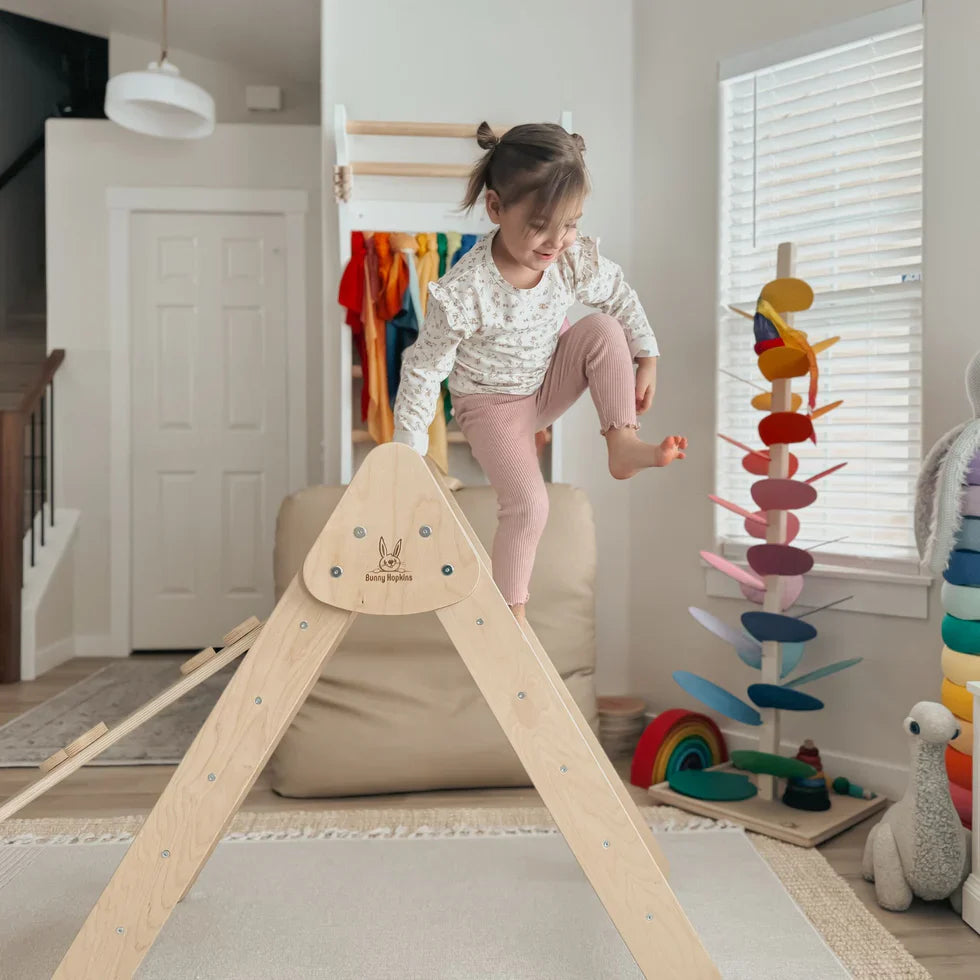
Best toy materials: solid hardwood (maple, beech, walnut), food-grade silicone, and organic cotton. Avoid plastic toys with BPA, PVC, phthalates, and flame retardants. Look for natural finishes (beeswax, plant oils) instead of synthetic paints. Skip battery-operated toys and anything with small detachable parts. Shop our vetted toy collection.
When Levi started teething and putting everything in his mouth, I realized toys weren't just playthings. They were something he was essentially eating for hours every day. That changed how I looked at what we were giving him.
Most conventional baby toys are made from plastic, and not just any plastic. Soft, flexible plastic toys often contain phthalates (which make plastic bendy), PVC (which releases toxic chemicals), and flame retardants (required by safety standards but linked to developmental issues). Hard plastic toys can contain BPA and other endocrine disruptors. The bright colors? Often heavy metal-based paints.
Then there's the fact that babies don't just touch their toys. They mouth them, chew them, drool on them, and sleep with them. Whatever those toys are made from ends up in your baby's system. After Kyle broke down the research on plastic toy safety, we switched to wood, silicone, and organic cotton. It's what Levi plays with every day, and it's what we trust.
Why Baby Toy Materials Matter
Babies explore the world through their mouths. From around 3-4 months through toddlerhood, mouthing is how they learn about texture, taste, and temperature. This means toys spend hours each day being sucked, chewed, and drooled on. Whatever chemicals are in those toys get transferred directly into your baby's mouth.
Plastic toys can contain dozens of additives: phthalates (used to soften plastic, linked to hormone disruption and developmental delays), BPA and BPS (endocrine disruptors that mimic estrogen), PVC (releases toxic chlorine compounds and requires plasticizers), flame retardants (required by safety laws but linked to lowered IQ and thyroid problems), and heavy metal-based pigments in colored plastics (lead, cadmium, chromium).
These chemicals don't stay in the plastic. They leach out over time, especially when exposed to heat, saliva, and repeated use. Studies have found phthalates in the urine of children who play with plastic toys, and BPA in the saliva of babies after mouthing plastic objects. The exposure is real and measurable.
Natural materials like solid hardwood, food-grade silicone, and organic cotton don't contain these synthetic additives. They're chemically stable, safe to mouth, and when finished properly (with natural oils and waxes instead of synthetic paints), they're as close to non-toxic as a toy can get.
What to Look For
Look for toys made from solid hardwoods like maple, beech, walnut, or cherry. These are dense, durable, and naturally antimicrobial. Avoid plywood or MDF (medium-density fiberboard), which are held together with formaldehyde-based glues.
The safest wooden toys are finished with food-safe oils (like coconut oil, linseed oil) or beeswax. If painted, look for water-based, non-toxic paints that meet EN71 or ASTM toy safety standards. Better yet, skip paint entirely and embrace natural wood tones.
Silicone toys should be made from 100% food-grade silicone with no fillers or additives. Silicone is non-toxic, heat-resistant, and doesn't leach chemicals. It's perfect for teething toys and bath toys that will be constantly in baby's mouth.
For soft toys, look for GOTS-certified organic cotton with natural fillings (organic cotton batting, wool, or kapok). Avoid polyester stuffing, which can contain flame retardants and sheds microplastics.
Toys without batteries, electronics, or complex mechanisms are safer and encourage more creative play. Think wooden blocks, stacking rings, simple rattles, and soft dolls. Less is more when it comes to baby toys.
Toys without small detachable parts eliminate choking hazards and reduce the risk of parts breaking off during rough play or teething. Look for toys that are carved or molded as a single piece.
What to Avoid
Soft, flexible plastic toys almost always contain phthalates to make them bendable. PVC (polyvinyl chloride) is particularly problematic because it requires toxic plasticizers and releases chlorine compounds. If a toy smells strongly of plastic or vinyl, skip it.
BPA-free plastic is often made with BPS, BPF, or other bisphenol alternatives that show similar hormone-disrupting effects in studies. The safest approach is to avoid plastic toys entirely, especially for items that will be mouthed constantly.
Beyond the choking hazard of batteries, electronic toys often contain flame retardants (required for the electronics), PVC-coated wires, and toxic solder (containing lead). They also encourage passive play instead of active imagination.
Many imported toys (especially cheap ones) use lead-based or cadmium-based paints, which are banned in the U.S. but still slip through. If you can't verify the paint is non-toxic and meets CPSIA or EN71 standards, don't risk it.
Foam toys (EVA foam, polyurethane foam) can contain formamide, a chemical that off-gasses and has been linked to respiratory issues and skin irritation. Foam bath letters and puzzle mats are common culprits. Stick to solid wood or silicone alternatives.
If a toy has a strong "new toy" smell or chemical odor right out of the package, that's off-gassing. It means volatile organic compounds (VOCs) are being released. This is especially common with plastic, foam, and synthetic fabric toys.
Beyond the choking hazard, small parts that can be pulled off (eyes, buttons, bells) create opportunities for babies to ingest plastic pieces. Look for toys with embroidered or carved details instead of glued-on parts.
Safe Toy Materials Explained
Solid Hardwood
Hardwoods like maple, beech, cherry, and walnut are naturally dense and durable. They're also naturally antimicrobial, which means they resist bacteria growth even when covered in baby drool. When finished with food-safe oils (like organic coconut oil or linseed oil) or beeswax, they're completely safe for teething babies. The key is to avoid plywood, particle board, or MDF, which use formaldehyde-based adhesives to bind wood particles together.
Food-Grade Silicone
Silicone is made from silica (sand), not petroleum like plastic. It's chemically inert, meaning it doesn't react with or leach into whatever it touches. Food-grade silicone is the same material used in medical devices, baby bottle nipples, and baking mats. It's heat-resistant up to 400°F, dishwasher-safe, and can be boiled for sterilization without breaking down. Perfect for teething toys and anything that will be constantly in baby's mouth.
Organic Cotton
For soft toys, stuffed animals, and fabric books, look for GOTS-certified organic cotton. This means the cotton was grown without pesticides and processed without toxic chemicals (no formaldehyde, no heavy metal dyes, no synthetic finishes). The stuffing should also be natural. Organic cotton batting, wool, or kapok (a plant fiber) are all safe options. Avoid polyester stuffing, which can contain flame retardants.
Natural Rubber
Natural rubber (harvested from rubber trees) is different from synthetic rubber (made from petroleum). It's naturally soft and flexible, perfect for teething toys and bath toys. The caveat: natural rubber contains latex proteins, so avoid it if there's any family history of latex allergies. Also, natural rubber toys can develop a slight odor over time (this is normal) and should be replaced every few months.
Wool
Organic wool is naturally flame-resistant (without chemical treatment), temperature-regulating, and antimicrobial. It's perfect for stuffed toys, felt play items, and soft balls. Look for wool that's processed without harsh chemicals. Lanolin (the natural oil in wool) is safe and actually beneficial for skin.
Understanding Toy Safety Standards
CPSIA (Consumer Product Safety Improvement Act)
U.S. law that limits lead and phthalates in children's toys. All toys sold in the U.S. must comply, but enforcement varies and recalls happen frequently. This is the baseline, not the gold standard.
ASTM F963 (American Society for Testing and Materials)
U.S. voluntary safety standard covering mechanical hazards (choking, sharp edges), flammability, and toxic substances. Better than nothing, but doesn't eliminate all chemical concerns.
EN71 (European Toy Safety Standard)
Europe's toy safety standard, which is generally more strict than U.S. standards. It limits more chemicals and requires more thorough testing. Toys meeting EN71 are a safer bet than those only meeting U.S. standards.
CE Mark
European certification indicating compliance with EU safety standards. However, it's self-certified (manufacturers declare compliance themselves), so it's not as reliable as third-party testing. Look for CE plus EN71 testing for more confidence.
FSC Certified Wood
Forest Stewardship Council certification means the wood was harvested sustainably. It doesn't speak to chemical treatment or finishes, but it's a good sign the manufacturer cares about environmental responsibility.
What Certifications Don't Tell You
Even toys that meet safety standards can contain questionable chemicals. Standards regulate the worst offenders (lead, certain phthalates), but hundreds of other chemicals in plastics, paints, and finishes aren't regulated. The safest approach is to choose natural materials that don't need heavy regulation in the first place.
How to Care for Non-Toxic Toys
Wooden Toys
Wipe with a damp cloth and mild soap. Don't soak or run through the dishwasher (water can damage wood). Let air dry completely. Every few months, apply a thin layer of food-safe oil (coconut oil, beeswax) to refresh the finish. Store in a dry place to prevent warping or mold.
Silicone Toys
Dishwasher-safe (top rack) or wash with hot soapy water. Can be boiled for 3-5 minutes to sterilize. Silicone doesn't harbor bacteria like plastic can, so basic cleaning is usually sufficient. Replace if you notice any tears, cracks, or stickiness.
Organic Cotton Toys
Most can be machine-washed on gentle cycle with fragrance-free, plant-based detergent. Skip the dryer if possible (air-drying extends fabric life). For spot cleaning, use a paste of baking soda and water. Avoid bleach, which breaks down natural fibers.
Natural Rubber Toys
Wipe with warm soapy water and air dry. Don't boil (heat can break down natural rubber). Keep away from direct sunlight, which can cause degradation. Replace every 3-6 months or when you notice any stickiness, cracks, or strong odor.
Rotate Toys Regularly
Keep only 5-7 toys in rotation at a time. Store the rest and swap every few weeks. This keeps toys fresh and interesting for baby, reduces clutter, and makes cleaning more manageable. Plus, it's easier to maintain a smaller collection of high-quality toys than a mountain of cheap plastic ones.
Age-Appropriate Non-Toxic Toys
0-6 Months
Silicone teething toys, organic cotton rattles, wooden grasping toys, soft organic cotton books, natural rubber balls. Focus on simple shapes, high contrast (natural wood tones vs. undyed cream cotton), and textures safe for mouthing.
6-12 Months
Wooden stacking rings, silicone stacking cups, organic cotton blocks, wooden push and pull toys, simple wooden puzzles with large pieces. Baby is developing fine motor skills and hand-eye coordination. Look for toys that encourage grasping, stacking, and cause-and-effect learning.
12-24 Months
Wooden shape sorters, larger building blocks, simple wooden vehicles (cars, trains), organic cotton dolls and stuffed animals, wooden musical instruments (drums, xylophones). Toddlers are mobile and curious. Focus on toys that encourage problem-solving, imaginative play, and gross motor development.
2+ Years
Wooden building blocks (larger sets), pretend play items (wooden kitchen sets, tool benches), art supplies (beeswax crayons, natural clay), outdoor toys (wooden balance boards, organic cotton play tents). Encourage creativity, social play, and physical activity with open-ended toys.
Common Questions About Baby Toys
Are wooden toys really safer than plastic?
When made from solid hardwood and finished with natural oils or waxes, yes. Wooden toys don't contain the phthalates, BPA, PVC, or flame retardants found in plastic toys. The key is ensuring the wood is solid (not plywood or particle board) and finished without toxic paints or varnishes.
How do I know if a toy's paint is safe?
Look for toys that explicitly state they use water-based, non-toxic paints meeting EN71 or ASTM standards. Better yet, choose unpainted wooden toys finished with natural oils or beeswax. If you can't verify paint safety, don't buy it.
Can I buy used toys safely?
Used wooden and silicone toys are generally fine (just clean thoroughly). Be cautious with older plastic toys (pre-2009 in the U.S.), which may contain higher levels of lead and phthalates that weren't regulated at the time. Used fabric toys should be machine-washable. When in doubt, stick with new toys from vetted brands.
What about bath toys?
Most conventional bath toys are made from PVC and develop mold inside (the black stuff you can't clean out). Choose solid wood or food-grade silicone bath toys instead. They won't trap water inside, dry quickly, and can be easily cleaned or boiled.
Are "natural" toys automatically safe?
No. "Natural" is an unregulated marketing term. A toy can be labeled "natural" and still be finished with toxic varnishes or painted with lead-based paint. Always look for specific materials (solid hardwood, food-grade silicone, GOTS-certified cotton) and specific finishes (food-safe oil, beeswax, water-based non-toxic paint).
Do babies really need toys?
Babies learn through play, but they don't need mountains of stuff. A handful of high-quality, open-ended toys (wooden blocks, silicone stackers, organic cotton dolls) provide more developmental benefit than a room full of plastic. Less is genuinely more when it comes to baby toys.
The Bottom Line
Baby toys aren't just for play. They're in your baby's mouth for hours every day, which means whatever they're made from ends up in your baby's system. Switching to solid hardwood, food-grade silicone, and organic cotton eliminates exposure to phthalates, BPA, PVC, flame retardants, and toxic paints.
Focus on simple, open-ended toys without batteries, electronics, or detachable parts. Look for natural finishes (beeswax, plant oils) instead of synthetic paints. Buy fewer toys but make them high-quality, durable pieces that will last for years and multiple children.
Every toy in our collection has been vetted by Kyle and Amanda for material safety. No questionable plastics, no toxic finishes, no greenwashing. Just toys you can trust in your baby's hands (and mouth) all day long.
Vetted by our co-founders Kyle Fitzgerald (@cleankitchennutrition, 700K+ followers) and Amanda Rocchio (@meowmeix, 1.6M+ followers), who bring extensive ingredient expertise to every product we feature.